

Aditi Gopalan & Abhinav Koppu’s Concept-Driven Bali Celebration Was More Than a Wedding — It Was a Living Love Story
In an era where destination weddings often compete on grandeur, Aditi Gopalan and Abhinav Koppu chose something far more difficult to achieve: meaning. Set against the lush landscapes of Bali’s Sofitel Nusa Dua, their three-day celebration, The Sapling, unfolded as an immersive narrative inspired by a poem Abhinav wrote for Aditi four years ago—a poem that would ultimately become the blueprint for every design, ritual, outfit, and experience across the wedding weekend.
“But the sapling decided to still stand.”
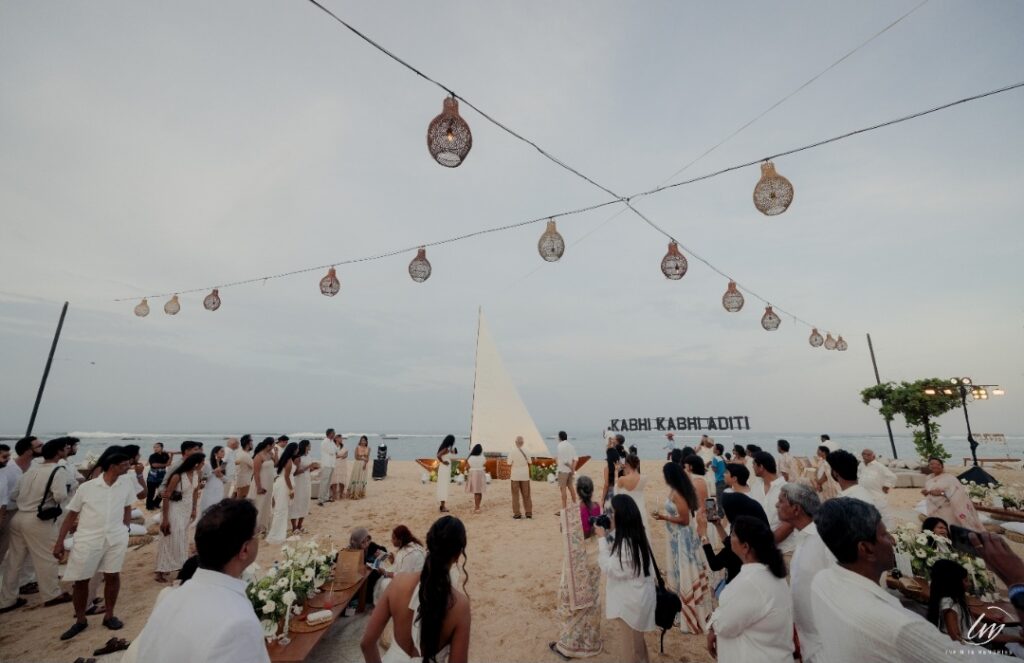
The recurring line from the poem became the emotional heartbeat of the celebration, representing resilience, love, healing, and the choice to keep growing despite life’s challenges.
When a Love Story Begins with Words
Aditi, a tech consultant, and Abhinav, a biotech software engineer and boxing instructor, are both trained dancers whose relationship was built as much on intellectual curiosity as on romance. Their first date revolved around language, meaning, and The Dictionary of Obscure Sorrows—a book inventing words for emotions that previously had no names.

That fascination with storytelling would later define their wedding.
Long before the proposal, Abhinav had written The Sapling, a poetic allegory about a young tree facing loss, isolation, and adversity before ultimately flourishing. What neither of them knew then was that the poem would one day become the architecture of their marriage celebration.
A Proposal Worthy of a Screenplay
For a couple that thrives on creativity, an ordinary proposal was never an option.
Abhinav secretly built an entire fake escape-room company, complete with a functioning website and actors, inspired by their favorite television series, White Collar. The final clue led Aditi to Lover’s Lane in San Francisco’s Presidio, where beneath a canopy of eucalyptus trees, he proposed.
Years later, that forest would inspire another—one built not from trees, but from flowers, symbolism, and shared memories in Bali.
A Wedding Designed Like Literature
Rather than viewing each wedding function as a standalone event, the couple treated the entire celebration as a multi-chapter story.

Guests were not invited to a Welcome Dinner, Haldi, Sangeet, Wedding Ceremony, or Reception. Instead, they entered chapters named Adomania, Watashiato, Scabulous, Aftersome, and Slinkical—each inspired by obscure emotional vocabulary and corresponding to a different stage of the poem.
Every detail reinforced the narrative.

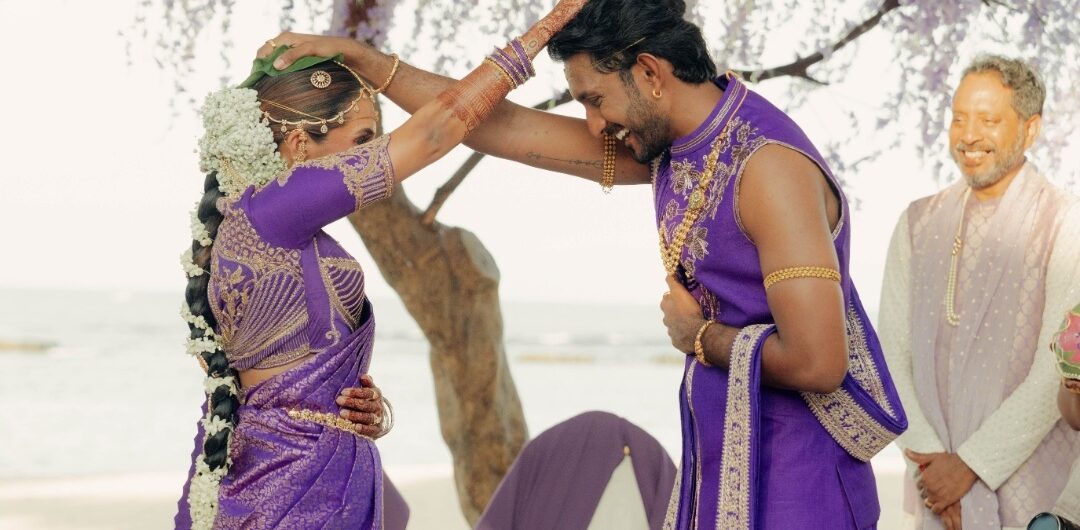
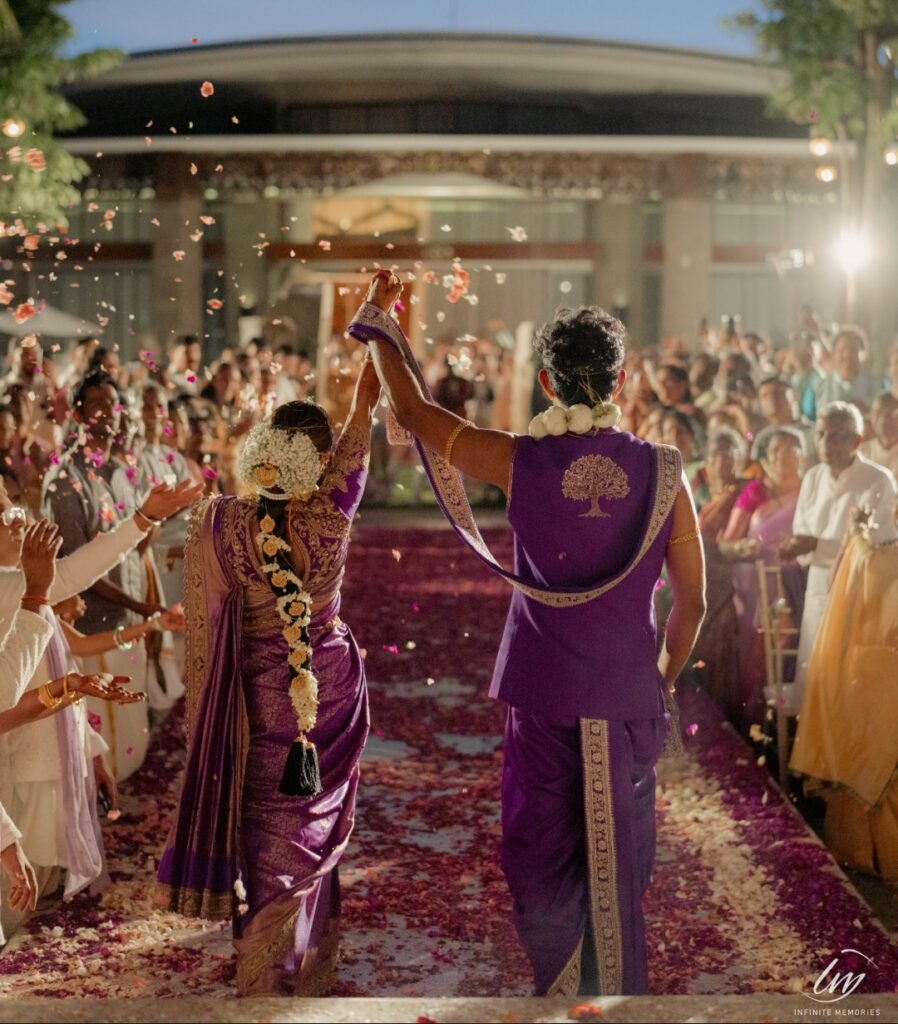
From bee motifs representing “Abhi” to purple flowers symbolizing Aditi, from embroidered storytelling on couture garments to décor installations referencing specific lines of poetry, the wedding blurred the line between literature and experience.
“Every event was a chapter. Every outfit carried the imagery. Every piece of décor translated a stanza into a physical space.”
Roots, Heritage and Remembrance
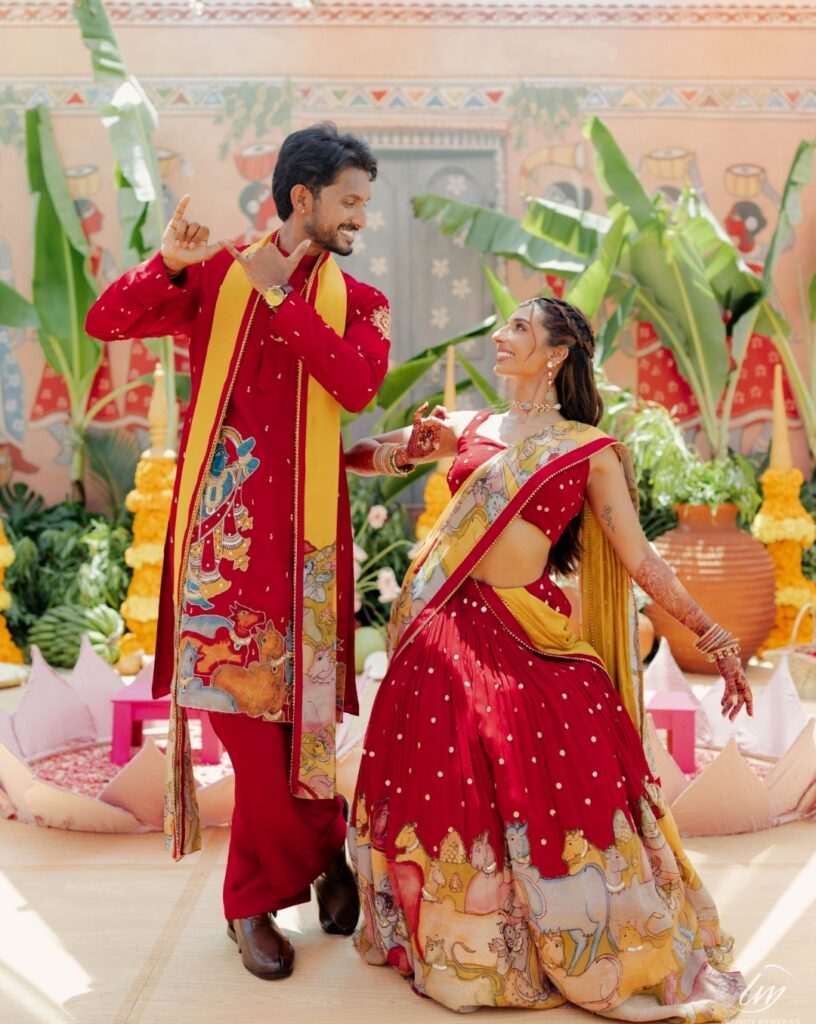
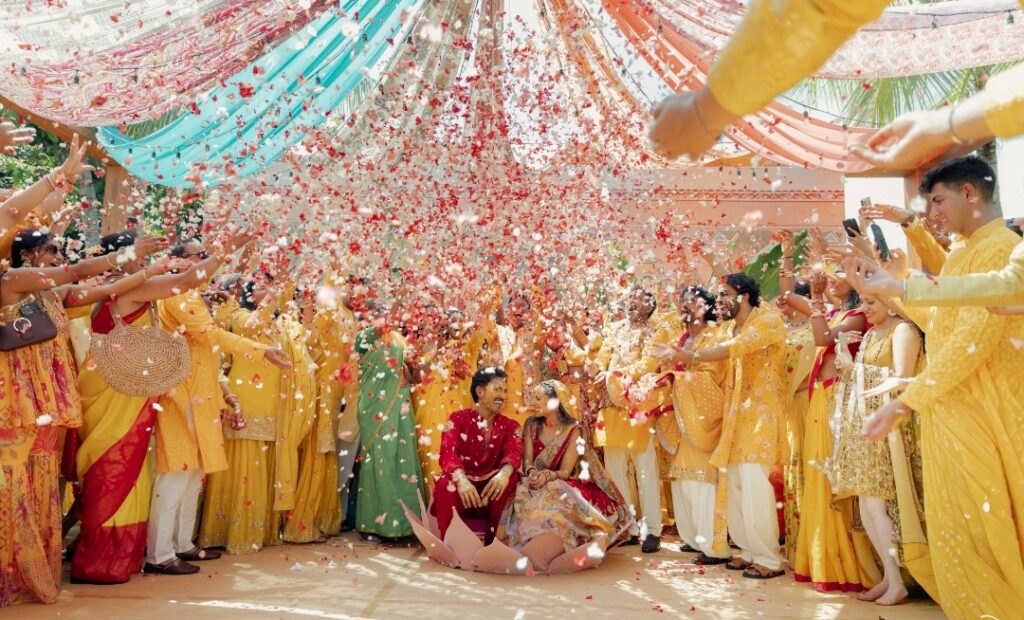
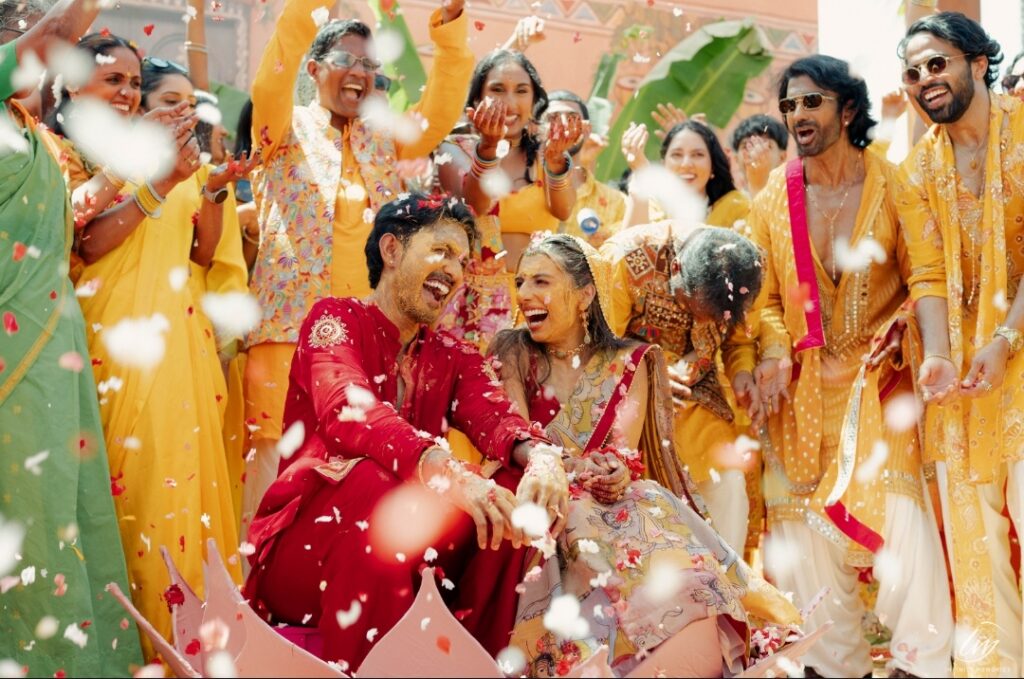
The Haldi chapter, Watashiato, became a moving tribute to ancestry and family.
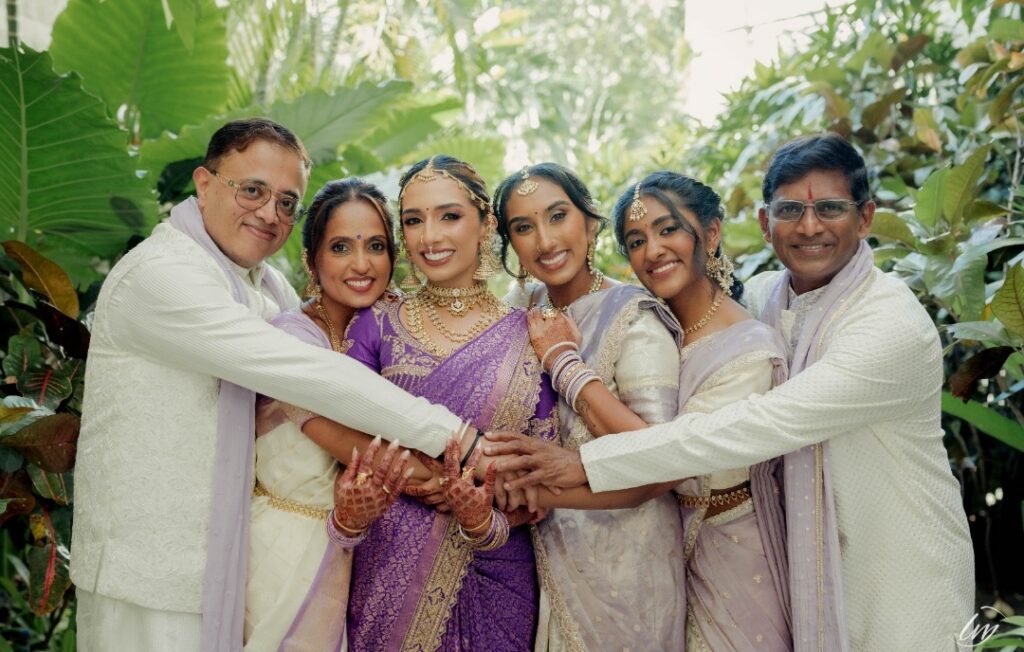
Terracotta palettes, Kalamkari art, and Kolam-inspired details celebrated the couple’s Tamil and Telugu heritage. Among the most poignant installations was a symbolic torn root honoring Aditi’s late mother, directly referencing the poem’s imagery of loss and resilience.
The emotional depth continued through fashion and performance, as the couple performed a semi-classical Bharatanatyam-inspired piece portraying Radha and Krishna, connecting personal identity with cultural storytelling.
Reinventing the Modern Hindu Ceremony
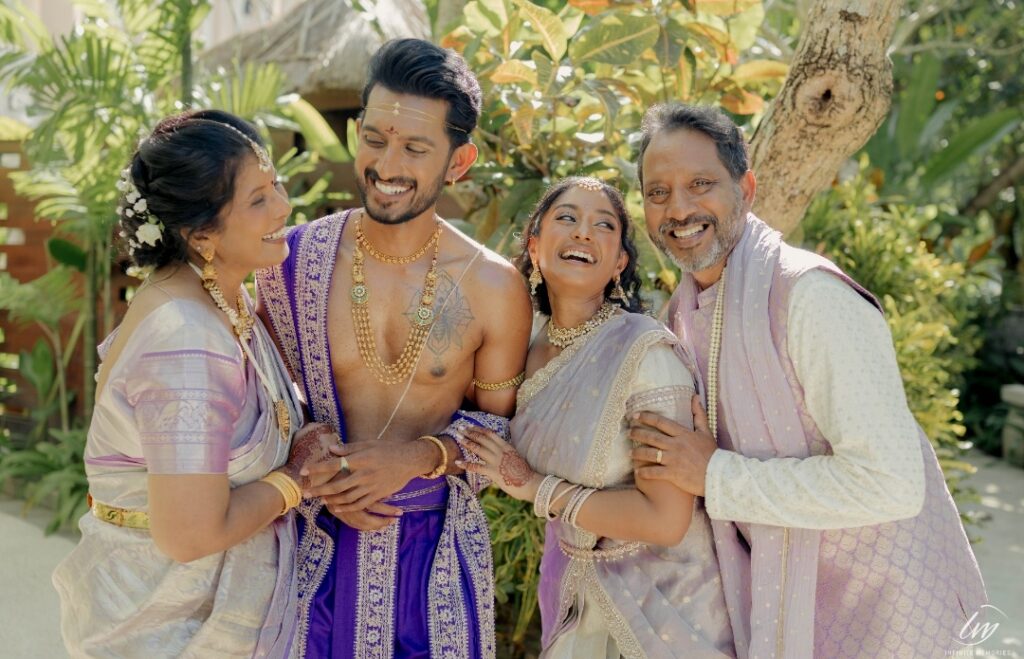
Perhaps the wedding’s most significant statement emerged during Aftersome, the ceremony itself.
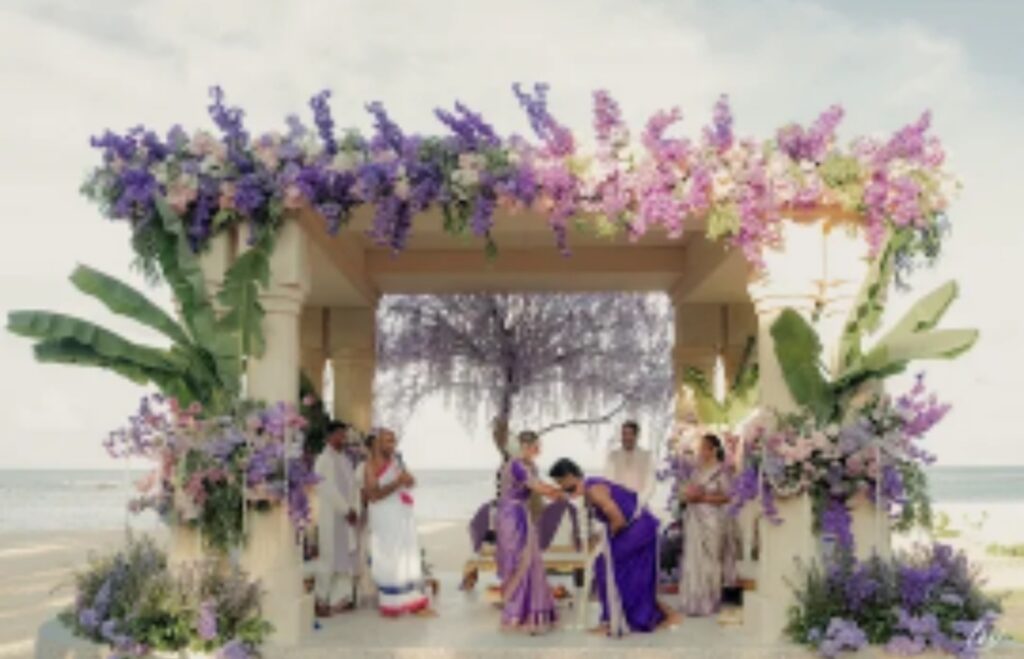
Conducted by queer Hindu priest Dr. Raja Gopal Bhattar, the rituals were carefully curated to remove patriarchal interpretations that have accumulated over centuries while preserving the spiritual essence of Hindu tradition. Sanskrit rituals were explained through English translations, ensuring every guest understood the meaning behind each sacred act.
In a wedding landscape increasingly seeking authenticity, this approach offered a compelling model for modern couples who wish to honour tradition while aligning ceremonies with their values.
“The ceremony returned Hindu rituals to what they always were before hierarchy rewrote them—personal, spiritual, and deeply intentional.”
A Forest of Love
The final chapter, Slinkical, represented the poem’s ending: abundance, connection, and permanence.
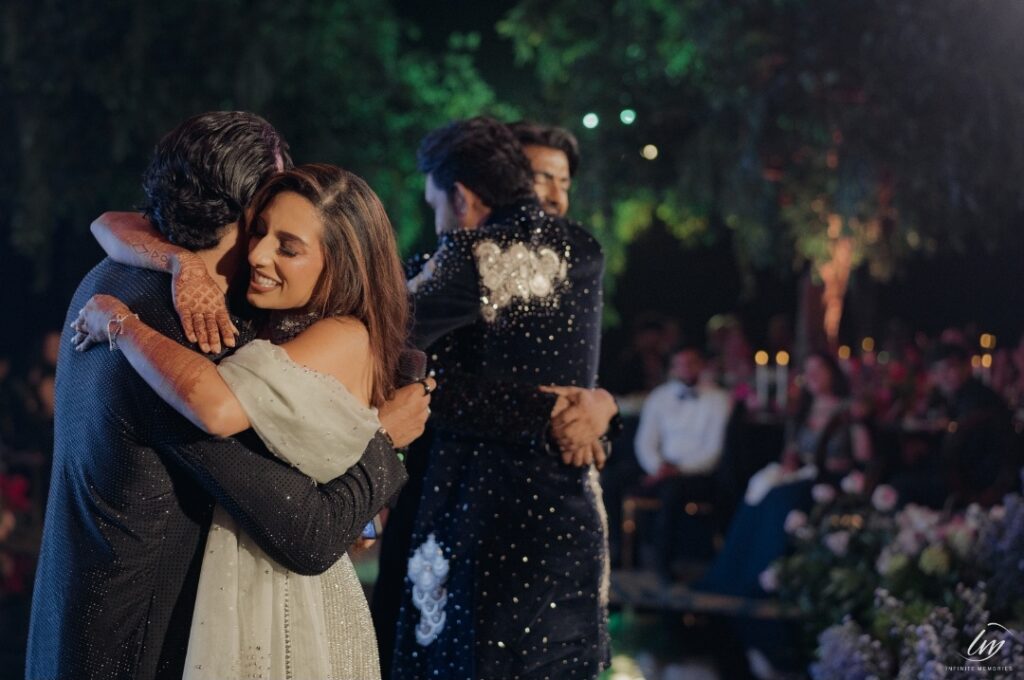
The ballroom transformed into an enchanted forest layered with greenery, mirrored installations, chandeliers, and reflective surfaces inspired by the poem’s line:
“Shards of glass would crumble to sand.”
What began as the story of a solitary sapling ended as a thriving ecosystem—a metaphor for the community, friendships, and life the couple had built together.
And fittingly, the poem’s refrain evolved as well.
Not “the sapling decided to stand.”
But:
“And for the rest of time, the sapling would stand.”

Why This Wedding Matters
Beautiful weddings are abundant. Truly personal weddings are rare.
What distinguishes The Sapling is not simply its aesthetics, but the extraordinary consistency of its storytelling. Every creative choice—from naming conventions and ritual design to fashion, florals, and guest experience—was connected to a single narrative thread.
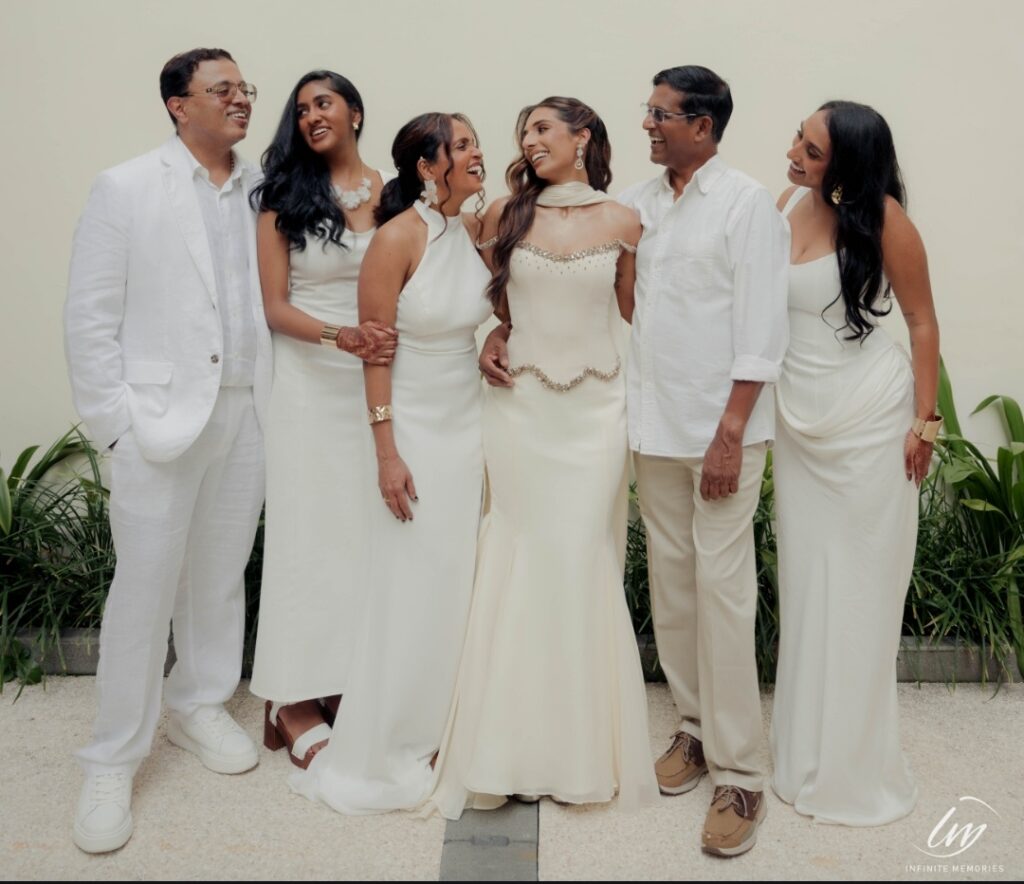
Even more remarkable is that the wedding was conceived, designed, and curated almost entirely by the couple themselves, creating an experience that felt unmistakably and authentically theirs.
In a world of Pinterest boards and wedding trends, The Sapling offers a refreshing reminder: the most memorable celebrations aren’t built around what’s popular. They’re built around what’s personal.